EP&R chapter in IAEA publication
The IAEA recently published a new “Safety Reassessment for Nuclear Fuel Cycle Facilities in Light of the Accident at the Fukushima Daiichi Nuclear Power Plant”.
On pages 27-30, there is a chapter on “Reassessment of Emergency Preparedness and Response”.
ACCESS TO NATIONAL PROGRAMMES on Radioactive Waste Management
An important step forward for transparency
In response to our request, the European Commission gave access to all national programmes and implementation reports on management of spent fuel and radioactive waste.
National Programmes and National Reports
According to Article 11 of Council Directive 2011/70/EURATOM, Member States had to develop and describe a national programme for the responsible and safe management of spent fuel and radioactive waste. The first programmes were, according to art. 14, to be reported to the European Commission before 23 August 2015.
The 2011 Directive also requires Member States to submit, on a triennial basis, a National Report on progress made on implementing the Directive including progress made on implementing the national Programme.
Availability of information
Member States are obliged to ensure that necessary information on the management of spent fuel and radioactive waste is made available to workers and the general public, and that the public is given the necessary opportunities to participate effectively in the decision-making process regarding spent fuel and radioactive waste management in accordance with national legislation and international obligations. The outcomes of the peer reviews shall be reported to the Commission and the other Member States. Member States are obliged to regularly review and update their national programmes, taking into account technical and scientific progress as appropriate as well as recommendations, lessons learned and good practices from peer reviews.
Acces to information and Transparency
After a Request from NTW for access to all national programmes, the European Commission released national programmes and reports. This is an important step forward in the transparency in the radioactive waste discussion.
NTW has a habit – as transparency organisation – to publish important documentation and correspondence on our website. To find all the reports on one place allows citizens to have easy access to their national reports and compare them also with those of other countries.
Some of the reports and programmes are still subject to further talks between the European Commission and the Member States. NTW will publish updated versions as soon as it will receive those from the Commission.
According to Johan Swahn, coordinator of NTW’s radioactive waste working group, “It is important that citizens can see where the European Union Member States are currently standing with their radioactive waste programmes. Radioactive waste is an ongoing problem for which none of the Member States can show a full and safe solution.”
NTW requested access to initially missing information in a confirmatory application, after which the European Commission granted access to some of that information and argued why other information (from Cyprus) remained confidential.
NTW does not agree with the Commission that Regulation 1367/2006 (also called the Aarhus Regulation) would not be valid for the Euratom Treaty.
This Regulation is not only part of EU environmental law under art. 192 of the Treaty of the Functioning of the European Union (TFEU) (as the Commission argues), but it is also part of transparency law valid for the EU and Euratom under art. 15 of the TFEU, which according to art. 106a of the Euratom Treaty is effective for the Euratom Treaty.
The national programmes and reports on Radioactive Waste Management:
Austria
National Programme, August 2015 & National Report
Belgium
No National Programme & National Report (FR) – National Report (NL)
Bulgaria
National Programme, August 2015 & National Report
Croatia
No National Programme & National Report
Cyprus
National Programme (EL) – National Programme (EN) , July 2015 & National Report (EL) – National Report (EN) – Report redacted – Annex not disclosed for security reasons as it contains information on discuses sources (Exception of Article 4.1 of Reg 1049/2001)
Czech Republic
National Programme, November 2014 & National Report (CS) – National Report (EN) – The Programme entitled “Update of the concept of radioactive waste and spent nuclear fuel management” is currently undergoing the SEA process and thus the final version is still to be finalized.
Denmark
National Programme, August 2015 & National Report
Estonia
National Programme, 2015 & National Report
Finland
National Programme (FI) – National Programme (EN), August 2015 & National Report (FI) – National Report (EN)
France
National Programme, 2014 & National Report
Germany
National Programme, August 2015 & National Report
Greece
National Programme, 2015 & National Report
Hungary
National Programme, July 2015 & National Report
Ireland
National Programme, 2015 & National Report
Italy
No National Programme & National Report
Latvia
No National Programme & National Report
Lithuania
National Programme, 2015 & National Report
Luxembourg
National Programme, 2015 & National Report
Malta
National Programme, August 2015 & National Report
Netherlands
National Programme, Draft & National Report
Poland
National Programme (PL) – National Programme (EN), October2015 & National Report
Portugal
No National Programme & National Report
Romania
National Programme August 2015& National Report– National Report-Annex
Slovakia
National Programme, 2015 & National Report (SK) – National Report (EN)
Slovenia
National Programme (SL) – National Programme (EN), 2015 & National Report (SL)- National Report (EN)
Spain
National Programme & National Report
Sweden
National Programme (S) – National Programme (EN), August 2015 & National Report
United Kingdom
National Programme, August 2015 & National Report
Assessing the safety of Nuclear Installations In Belarus
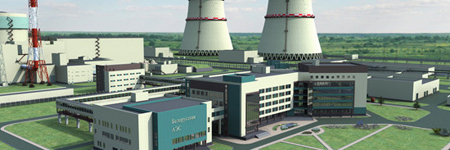
The territory of Belarus received 70% of the radioactive fallout from the Chernobyl accident. As a result, nearly 23% of its territory was contaminated. However, thirty years after the accident, Belarus is building its first nuclear power plant at Astravyets / Ostrovetsonly 20 km from the border with Lithuania. The first unit is set to become operational in 2018 with Russian assistance. But as the project advances, safety concerns are mounting. The alarming lack of transparency and safety of this project calls for an urgent reassessment.
Belarus to realise nuclear power aspirations with help from Russia
The aftermath of the 1986 Chernobyl disaster in Ukraine – which contaminated nearly a quarter of Belarus but remains a taboo subject to this day[1] – stalled Minsk’s own budding nuclear aspirations for decades.
In 2006, however, the government approved plans to build Belarus’s first NPP. Ostrovets, some 50 km east of Lithuania’s capital, was chosen as the site in 2008, confirmed by presidential decree in 2011.
In 2009, Minsk announced that Russian company Atomstroyexport would be the general contractor. The first concrete was poured in 2013. Russia is to deliver a VVER 1200 reactor by the end of 2016. It will be cooled with water from the river Neris, which flows downstream through Vilnius. The NPP first power-generating unit is scheduled for commissioning in 2018, and the second one in 2020. Two more units are proposed for operation by 2025.
Violation of international regulations
The construction of Ostrovets NPP faces international opposition on safety grounds.While all domestic opposition to the NPP is muted by Belarus’s President, Lithuania is openly accusing Belarus of violating the Espoo and Aarhus Conventions, by failing to complete an environmental impact assessment, notify Lithuania about the project and inform the public about the impact on the river Neris and on drinking water in Lithuania[2].
In July 2014, at the Ministerial Conference of the Aarhus Convention, the parties declared that the project failed to comply with the Convention’s requirements in the construction of the NPP[3]. The same year, the Implementation Committee of the Espoo Convention stated that Belarus had violated the Convention by not providing Lithuania with the information necessary to assess the possible environmental impact of the nuclear project.[4].
In March 2016, the committee suggested that an international inquiry commission help resolve the dispute. And EU Climate Action and Energy Commissioner Miguel Arias Canete supported Lithuania’s position that Belarus’ nuclear power plant under construction in Astravets, some 50km from Vilnius, must comply with all Espoo Convention and nuclear safety requirements. According to Miguel Arias Canete, the Commission will ensure that the assessment of the Astravets NPP’s impact on the environmental conditions will be properly made[5].
An accident occurred in April 2016
In early May 2016, the Belarusian Minister of Energy confirmed, under pressure from the EU, that an accident occurred a month earlier[1], on April 8, at the construction site, causing partial destruction of the structure supporting the confinement. Without any consequences according to the Belarusian authorities.
Inappropriate stress tests
Following the 2011 Fukushima nuclear accident, the European Council in March 2011 requested stress tests of all EU NPPs. In this context, the Commission undertook, with seven neighboring EU countries including Belarus, to perform stress tests in nuclear power plants in neighboring countries[2]. But apparently nothing has been done. For its part, Belarus is committed to making these stress tests by the same company which is in charge of building the plant, Rosatom which violates an independence of expertise.
On 20 May, the Lithuanian Commissioner (EU Health and Food Safety Commissioner Vytenis Andriukaitis) pledged that European standards should be applied on the site of Ostrovets, by declaring: “the Commission will demand that Belarus review the project before switching the Astravyets plant on. The stress tests will be reviewed in Brussels as well”. The Commission has promised to put the item on the agenda of their weekly meeting in early June[3].
MEPs quizzed Commission on Belarus nuclear power plant safety
The EU Commission was quizzed on the safety of building work at the nuclear power plant in Belarus in a plenary debate on 6 June 2016. Most MEPs raised concerns about its safety and compliance with international standards.
MEPs asked the Commission whether the Ostrovets plant complied with EU nuclear safety rules and urged it to use all available instruments to ensure that the plant undergoes proper safety stress tests. Many MEPs highlighted the cross-border nature of the issue – a nuclear fallout cannot be contained within a country’s borders – and the difficulty of verifying reports of the risks around it.
The MEP Julie Ward emphasised that “we must continuously strive for greater nuclear safety and transparency and support the civil society organisations who work in the field to advance that transparency.The nuclear power industry is a big player in the energy industry, with huge subsidies from the public purse. It therefore has a duty to work closely with host communities and Nuclear Transparency Watch to ensure that the plants are operating to the highest standards. ” Her full speech : https://www.youtube.com/watch?v=bo10AVo1B-Y&feature=youtu.be
The Commission – which played an observer role in the construction of the Ostrovets plant – said it would use all instruments available to ensure the highest safety standards. However, Commissioner Christos Stylianides also reminded Parliament that the nuclear stress tests called for by many MEPs were voluntary and a national competence. He nonetheless said that the independence of Belarusian nuclear regulators needed to be strengthened. The Commission expects the Belarus National Assessment Report on the plant to be presented in 2016/17.
[3]http://www.baltic-course.com/eng/energy/?doc=121036
[1] “Belarus’s Chernobyl taboo”, 27 april 2016: https://www.opendemocracy.net/od-russia/tatyana-ivanova/belarus-s-chernobyl-taboo
[4] 6th Meeting of the Parties to the Espoo Convention, 2-5 June 2016:http://www.unece.org/env/eia/meetings/mop_6.html
[5] “EU energy commissioner backs Lithuania’s position on Belarus nuclear plant”, 15 April 2016:http://belsat.eu/en/news/eu-energy-commissioner-backs-lithuania-s-position-on-belarus-nuclear-plant/
The recommendations of the Belgian Superior Health Council: a real opportunity to upgrade safety standards
In April 2016, the Belgian government announced that the update of the national nuclear emergency plans would take into account the recommendations of the Belgian Superior Health Council (SHC) published in March 2016.
Context
The National Nuclear Emergency Plans in Belgium date from 2003[1] and contain the general principles of international recommendations, such as sheltering, the distribution of iodine tablets and evacuation. It also determines the action limits for each protection measure, and geographically determined areas where emergency measures must first be prepared, organized and repeated. In a (December) 2014 report commissioned by Greenpeace Belgium[2] in the framework of NTW’s Working Group on EP&R, David Boilley, Chair of the Association for the Control of Radioactivity in the West (ACRO) and member of NTW, pointed out the inadequacy of the Belgian Emergency Preparedness & Response (EP&R) compared to the experiences in Fukushima. In April 2016, the Belgian government announced that the update of the national nuclear emergency plans would take into account the recommendations of the Belgian Superior Health Council (SHC) published in March 2016 which themselves are taking into account some insufficiencies previously pointed out by Greenpeace Belgium and NTW. In the context of the fifth anniversary of the Fukushima-Daiichi disaster, the SHC has carried out a review of the Belgian nuclear emergency plan and in March 2016, the Council published its newest recommendations on “Nuclear accidents, environment and health in the post-Fukushima era: emergency response“[3]. These statements contain some recommendations described in the report by David Boilley.
Eloi Glorieux, member of NTW and energy campaigner at Greenpeace Belgium, summarizes here the main conclusions of the SHC report:
The SHC emphasizes 3 essential points which have to be taken into account in future licensing procedures and emergency planning and response plans:
1. A severe nuclear accident can happen everywhere, even in technologically advanced countries.
2. The impact of a severe nuclear accident extends over great distances. The general assumption that the radiological consequences of a severe accident remain limited to the immediate surroundings of a nuclear power plant are contradicted by the practical experiences in Chernobyl and Fukushima. The SHC emphasizes that, in spite of the favourable weather conditions, areas up to 30 km were evacuated. Translated to the Belgian situation, this means that at least 1 million citizens would be affected. Chernobyl showed that radioactive iodine can provoke thyroid cancer in sensitive populations at a distance of 100 km.
3. The consequences of nuclear disaster remain concrete for a long period, due to which the psychological effects of the socio-economic disruption of the society adds to the short-, mid- and long term medical effects.
Therefore the SHC made the following recommendations:
- Risk analyses must be expanded to the new findings and experiences and nuclear licensing procedures must be adapted to them.
- There is a need for specific vulnerability analyses, such as the population density and the presence of industrial centres close to the nuclear reactors. Such analyses should also take into account scenarios of very low probability but high impact.
- The SHC advises to expand the emergency planning zones for evacuation to 20 km (for the moment this is only 10 km in Belgium) and for the distribution of stable iodine tablets and the ability to secure people to 100 km (which would cover the entire surface of Belgium)
- The SHC also recommends to elaborate long term rehabilitation strategies to rebuild the economic and social structure of the society and the country.
- Because a nuclear accident in Belgium or at a nuclear power station at his borders will have transnational consequences, the SHC recommends the reinforcement of bilateral and European agreements.
- The SHC advocates structural and transparent decision making and communication on nuclear emergency and response planning, instead of the decision-making by a hand full of nuclear experts and policy makers as it is the case today. All stakeholders, including the public, must be able to participate in this. Therefore, the Council recommends the establishment of information and consultation structures on the French model of CLIS ( local information commissions ) at a European level.
- The SHC stresses that it is necessary that the nuclear regulatory bodies are really independent from the operators of nuclear power plants and of the political policy makers and that they are fully transparent. The SHC recommends to evolve to the creation of a European nuclear regulatory body within the EU-treaty (so not in Euratom).
Uncertain implementation
The recommendations of the Council represent a real opportunity to upgrade nuclear safety standards in Belgium. However, we are still far from the stage of implementation. Currently, the idea that received most attention in the media was a nation-wide distribution of iodine tablets. However, discussions between the cabinets of Home Affairs and Public Health only talk about “in first instance for children and pregnant woman”.
A consultation about proposed changes in the new emergency plan is planned with the governors and “involved” mayors, as well as with the regions. Participation of civil society representatives like NTW, let alone the wider public does not seem to be part of the agenda.
Nuclear Transparency Watch therefore welcomes the conclusions from the SHC report and urges the Belgian authorities to fully implement them. The currently taken steps cannot assure inadequate protection after a nuclear accident.
[1] http://fanc.fgov.be/GED/00000000/3400/3491.pdf
[2]http://www.greenpeace.org/belgium/Global/belgium/report/2015/RapportDavidBoilleyFR.pdf
New report on Nuclear Safety in India
Greenpeace India today released a report lead by Davidd Boiley, Director of ACRO and member of NTW. The report, titled ‘Red Alert – India’s nuclear disaster plans, outdated and inadequate’, assesses India’s nuclear disaster plans and concludes that India’s plans do not offer a complete defence-in-depth for existing nuclear plants.
The report stresses the breaches of current India’s plans:
– The report examines differences with Fukushima and shows a lack of emergency preparedness and provides recommendations for the authorities to act upon.
– The manual on emergency preparedness at Kalpakkam still has emergency guidelines from an ancient manual adopted in 1984, well before the Chernobyl disaster.
– India’s acceptable limit of contaminated food are set dangerously higher than international limits.
– The report also examined the weak learnings of the recent nuclear accident at Kakrapar Atomic Power Station (KAPS) and the lack of an Independent Nuclear Regulator.
Please download here the full report
Can civil society directly influence policy and decision-making?
Citizen control over nuclear safety and policy.
Jan Haverkamp
’s presentation at the conference RICOMET 2016
On 3rd June, Jan Haverkamp, member of NTW, made a presentation at the Second International Conference on Risk Perception, Communication and Ethics of Exposures to Ionizing Radiation – RICOMET 2016. NTW remains attached to RICOMET’s concerns. There is no doubt that social sciences play a central role to improve transparency and public participation in the nuclear sector.
Please download Jan Haverkamp’s presentation and his text – en.
Abstract
Access to information, public participation and access to justice – the three pillars of the Aarhus Convention – are increasingly securing transparency in the nuclear sector. Members of the European Parliament, NGOs, academia and local information committees three years ago founded Nuclear Transparency Watch – an organisation that seeks to implement those three pillars of the Aarhus Convention in the nuclear sector. In that way, it already ensured more openness in areas like emergency preparedness and response and radioactive waste management. It supports citizens to implement their rights in access to information and public participation around nuclear decisions. This is still an ongoing process, but the contours of what the nuclear industry really stands for are slowly becoming more clear.
Intake of iodine tablets in case of a severe nuclear accident
The intake of iodine pills is a protective measure in the event of a severe nuclear accident.
Download here the guide of the German federal Ministry for the environment, nature Conservation and nuclear safety
PINC: the real picture
NTW ANALYSIS ON PINC 2016
On 4th April 2016 the European Commission published its latest communication on the Nuclear Illustrative Programme (PINC). The European Commission is required to regularly develop new Pinc outlining the goals of the nuclear sector. She has just published its first report since the accident at Fukushima Daiichi.
BACKGROUND
PINC is a communication of the European Commission, presented under Article 40 of the Euratom Treaty for the opinion of the European Economic and Social Committee. PINC is a periodically (roughly every 7 years) issued overview from the European Commission indicating what kind of investments are foresees in the nuclear sector in the upcoming period.
The last PINC was published on the 05/04/2016. [1]It is the first report since Fukushima in 2011, and thus aims to focus on the investments related to post-Fukushima safety upgrades and to the safe operation of existing facilities. It’s presented as a « basis for discussion and aims to include all stakeholders, especially civil society, in the discussion on nuclear energy trends and related investments for the period up to 2050 ». [2]
PINC does not indicate how much money the European Commission or the European Union or Euratom as governance structures are going to invest in nuclear. It gives over-all estimates in the sector. PINC furthermore does not give hard figures, but only soft estimates.
INVESTMENTS FOR NEW BUILD?
European Industry Group Calls For comprehensive subsidies For New Build. For Foratom, the European Commission (EC) should establish clear guidelines on investment for nuclear new build in the forthcoming PINC. In a 2015 position paper[3], Foratom said more than 100 nuclear reactors would need to be commissioned over the next 35 years if Europe was to maintain at least the current capacity of nuclear generation. Asked about the eventual cost of such a major new build effort, Mr Ivens, Foratom’s institutional affairs director, said the required investment would probably be between €500bn and €800bn, based on recent estimates[4].
But the cost of new-build are escalating and underestimated. Without lifetime extensions, around 90% of the EU’s existing nuclear reactors would be shut down by 2030. But even with lifetime extensions, 90% of existing nuclear electricity production capacity will need to be replaced before 2050. This will cost €350-500 billion, estimates the Commission.
The PINC analyses different financing models in several EU Member States and underlines the understatement of the year by speaking about projects in the EU, which have experienced delays and cost overruns. The Finnish Olkiluoto and French Flamanville projects are both at over three times their original budgets and years behind schedule.
The Commission admits that the costs of new-build projects “are in the high range” of what analysts expected. Hinkley Point C tops the charts with €6.755 per KWe (vs. a €5.290 per KWe average for a “first of a kind” twin unit). There is a “historical trend of cost escalation”, the Commission concludes. Even in France, construction costs per MWe in 1974 were three times lower than those of units connected to the grid after 1990.
WHICH INVESTMENTS ARE FORESEEN FOR NUCLEAR PLANT LIFE-TIME EXTENSIONS ?
Upgrades for plant life-time extensions beyond the initial foreseen technical lifetime of reactors (of 30 or 40 years, depending on design), with safety upgrades “as far as reasonably practicable”, are supposed to need between 45 and 50 Bln Euro until 2050. This is a strange figure, because only France already will need to invest around 100 Bln Euro in the upgrade of its fleet until 2030, while closing down a third of it. Greenpeace furthermore had to conclude after the post-Fukushima stress tests that many important upgrades proposed for existing nuclear reactors were bogged down by “more studies” or delayed because of economic reasons.
DECOMMISSIONING AND WASTE FUNDS
It is the back-end of the fuel cycle – waste management and decommissioning – that is going to claim a rising share of investments in the years ahead. More than 50 of the EU’s 131 reactors are likely to be shut down by 2025, and there are still many unkowns. Only 3 reactors in Europe have so far been completely decommissioned – all of them in Germany. The European commission wants Europe to become leader in decommissioning technology and experience.
Member States expect to need a total of 253 Bln Euro for decommissioning and waste until 2050 – 123 Bln Euro for decommissioning and 130 Bln Euro for spent nuclear fuel and nuclear waste management. This does not include costs expected after 2050, which could be more than this amount, because most countries only expect to start implementing radioactive waste depositories after 2050. Currently, there is only 150 Bln Euro aggregated in dedicated funds.
RADIOACTIVE WASTE MANAGEMENT AND DECOMMISSIONING: LARGELY UNKNOWN TERRAIN
About Nuclear waste, Member States will need to move from research to action on geological disposal. The first facilities are expected to be up and running in Finland, Sweden and France between 2020 and 2030 (Finland is in the lead with a due date of 2023). Almost all other Member States are at the “preliminary studies” stage. Public acceptance remains a challenge. The projected costs of long-term geological storage depositories run from less than half a billion in Slovenia and Croatia to over €20 billion in France, according to PINC. It all adds up to €68 billion, or nearly half of the total estimated waste management costs of €142 billion out to 2050. For these, the average result of €3.23 per MWh is more than double what was estimated in recent studies, the Commission notes. Over a third of the total costs are for France.
The other half of the end-of-life equation, decommissioning, is largely unknown terrain. Experience is rare: although 89 reactors had been permanently closed in Europe as of October 2015, only three have been fully decommissioned and all three were in Germany. Worldwide, only 13 more have been decommissioned; all of them in the US. The costs are difficult to estimate. The Commission comes up with a total cost of €126 billion for decommissioning out to 2050. Some will argue that real costs are likely to be far higher. Estimates of decommissioning costs per unit also vary “significantly” between Member States, from €0.20 billion in Finland to €1.33 billion in Lithuania. Germany and the UK are at the high end (€1.06 billion and €0.85 billion, respectively) while France is at the low end (€0.32 billion). Decommissioning costs vary according to reactor type and size, location, the proximity and availability of disposal facilities, the intended future use of the site and the condition of the reactor at the time of decommissioning. Although decommissioning might gradually become cheaper, the cost of final waste depositories is largely unknown and costs could also grow, rather than shrink, over the many decades in question.
Among EU member states still operating nuclear plants, only Britain’s operators have enough dedicated assets to cover the expected costs, 63 billion euros, according to the PINC. But the UK government has taken over all financial responsibility for”legacy” waste and facilities, i.e everything except new build.Does the Commission state that we have to keep nuclear energy in order to be able to collect funds for the decommissioning and RWM? In Sweden nuclear energy is already non-competitive with the present low electricity prices. Raising the nuclear waste fees will make the situation even worse. However, starting to phase out the reactors will likely lead to higher electricity prices so that the remaining reactors can pay higher fees. So a phase-out strategy will likely maximize the collected funds.
In Europe, the finally collected funds won’t reach a level where the government will not have to step in towards the end. France, which operates Europe’s largest fleet of nuclear plants, is heavily underfunded. It has earmarked assets only worth 23 billion euros, less than a third of 74.1 billion euros in expected costs. In Germany, an extra 7.7 billion euros is needed on top of the current 38 billion euros.
TO REMEMBER :
• 90% of the nuclear fleet in the EU will have to be replaced in 2030 with other capacity (be it nuclear, fossil or renewable) or efficiency if there is no life-time extension. This follows the phase-out rate in the Greenpeace e.a. Energy [R]evolution Scenario
• The Commission hopes that standardisation of designs will push down construction prices of new nuclear.
• Euratom Member States share the recognition of “the need to ensure the highest possible standards for the safe and responsible use of nuclear power and the protection of citizens from radiation.” PINC furthermore states: “For those Member States choosing to use nuclear, the highest standards of safety, security, waste management and non-proliferation have to be ensured across the whole fuel cycle.”
• The European Commission wants to secure that no country becomes completely dependent of one nuclear fuel element provider (Russia)
• The European Commission hopes that between 2020 and 2030 the first deep geological disposal sites for radioactive waste will go into operation in Finland, Sweden and France. It fails to mention that this is still not sure because of technical and regulatory challenges
• The European Commission opens up the possibility for Member States to develop shared nuclear waste repositories. This is a dangerous development that may entice some Member States (e.g. Hungary, Slovenia, the Netherlands, Lithuania) to slow down the development of their own nuclear waste management in order to wipe it under the carpet somewhere else.
• The European Commission condemns countries depending only on temporary storage facilities for nuclear waste: “Interim storage is, however, provisional and should not postpone the development of permanent solutions.”
• There is a gap of 123 Bln Euro for decommissioning and waste funds until 2050.
[1] http://ec.europa.eu/transparency/regdoc/rep/1/2016/EN/1-2016-177-EN-F1-1.PDF
[2] http://europa.eu/rapid/press-release_IP-16-1202_en.htm
[3] http://www.foratom.org/newsfeeds/377-foratom-on-pinc-maintaining-nuclear-s-current-capacity-to-reach-eu-energy-goals-2050.html
[4] http://www.nucnet.org/all-the-news/2016/02/08/european-industry-group-calls-for-clear-eu-state-aid-guidelines-for-new-build
EVENT Summary Report: 5 years after Fukushima, what are the lessons for Europe?
On 22nd March 2016, NTW organized a conference in the European Parliament: 5 years after Fukushima, what are the lessons for Europe? It was the opportunity to listen to witnesses from Japan and current challenges in Europe.
In her opening statements, Michèle Rivasi, Chair of Nuclear Transparency Watch and Member of the Parliament (Group Greens/ALE) and co-founder of the CRIIRAD, reminded that she went to Fukushima twice where she could have direct contact with the population. She noticed two important facts at the time: first, the lack of information provided to the population about the potential consequences of the nuclear accident for exemple in terms of radioactivity, and secondly a general tendancy to minimize these consequences. The nuclear accident of Fukushima was the starting point to create Nuclear Transparency Watch in 2013 following the call of MEPS for more transparency on nuclear safety. Indeed, Fukushima showed that even a country with high technology like Japan absolutely needs to involve civil society in order to improve nuclear safety. This conference, thanks to the different speakers, aimed to show what lessons we can learn from this accident in order to improve safety standards in european nuclear power plants. Michèle Rivasi concluded her introduction by emphasizing that we should always consider the human catastrophy at least as much as the technical one.
FIRST PANEL
Mr Takahiro Hanzawa, representative of the municipality of Date made his presentation about the Responses of Date city to radiation disaster caused by Fukushima Daiichi Nuclear Power Station Accident. For a reminder, Date is located in Fukushima Prefecture, about 80km from the Fukushima Daiichi Nuclear Power Station (FDNPS). At the time of Fukushima nuclear accident, 1000 evacuees living in the 20km direct radius from FDNPS came to Date City, however, three months and a half after the accident, it was realized that the site was too contaminated to be safe for human beings and evacuated. During our event Mr Hanzawa mainly tried to show that the current situation in Date is under control. According to a study, among the 52, 783 citizens who monitored their external exposure doses using dosimeters fr 1 year), 95% were under the dose of 2mSV, when date’s practical target is 5 mSV/year. Mr Hanzawa stressed as well that radiation protection of children succeeded as apparently no children under 15 exceeded 4mSv per year. The reaction of municipalities and residents showed that at first, as there was no preparedness and scenarios for responses, people and municipalities had to act at their own discretion. Immediately after the accident, a flurry of mixed information were communicated to the public, which was partially caused by lot of contradictory information on social media and had a counter-productive effect. The information stabilized and the surrounding situation gradually became clear and correct information gradually spread. Mr Hanzawa explained that the level of radiation in Paris, Tokyo and Fukushima are pretty much the same, relying on a study made by foreign students coming from six highschools. However even if the level of radiation is now considered safe, it is a real problem because people are reluctant to return, for economical reasons and because they already started a new life somewhere else, which represents a real challenge for japanese authorities. He then reminded that 5 years after the Fukushima accident, there is no clear prospect of decommissioning at Fukushima Daiichi and that decontamination and infrastructure reconstruction have not progressed in « difficult-to-return » areas. Mr Hanzawa concluded his intervention by saying that sharing information quickly is important at a european level and that collaboration of countries is essential in nuclear accidents.
Gilles Hériard Dubreuil, Director of the french consultant group Mutadis, presented a report on Local populations facing long term consequences of nuclear accidents. [1]Gilles Heriard Dubreuil emphasised the fact that post-accidental management is a very peculiar case that needs a lot of attention in order to be able to understand its complexity, created by a set of interdependent elements. Indeed a nuclear accident is not only radiological but has an impact on all elements of the daily life for people living in contaminated areas, but also for the people leaving the area (and who are then trying to start a new life somewhere else with all the problem it can involve). All activities are impacted (economy, education, leisure, public services, etc.). Local populations are facing important dilemmas : should they stay or should they leave ? They need to make very difficult choices, and there are few dispositions for people that self evacuated. Added to these dimensions is a general feeling of loss of control. In that situation, populations wait for information, support, expertise but usually, because of some misunderstandings, misinformations or even some lies, there is a real of lack of trust developping towards the social system, which then leaves populations feeling even more lonely while facing the crisis. This type of situation raises the question of governance as the classical top-down approach is not suited to this type of situation. Public authorities can provoke adverse effects like spreading distrust and damaging social bonds in a very serious way. To conclude, Mr Dubreuil observed that post-accidental management can never be a return to normal, it will always be a transition state, but to understand all the complexity and the stakes of a situation helps and facilitates this transition. The main goal is for people to find a transition path towards regaining autonomy and dignity.
This first panel was concluded by the intervention of the italian MEP Dario Tamburrano, Group EFDD, co-hosting the event and who actively engaged in passing an amendment so nuclear energy wouldn’t be financed by european institutions. In his speech, he evoked the Italien poet Garete who compares humans to autumn leaves staying on the trees before falling. This metaphor expressed his worries about the choice of nuclear still being very tempting for numerous member states, even after the two severe accidents of Chernobyl and Fukushima. In Ukraine, european institutions currently finance the improvement of nuclear facilities dating from before Chernobyl, which is an accident that Dario Tamburrano will always keep in mind as a terriying situation. Now, even in best scenarios, societies will always to face the difficulties of nuclear contamination and of radioactive waste. This temporality of thousand years is totally unknown for humans. Dario Tamburanno concluded by stressing that it’s always investors who are protected, and never the citizens’ health and safety.
Questions & debate
British MEP Julie Ward, Group S&D went to Fukushima in september-october 2014. At the time she saw bags of contaminated soils just left out and slowly desingrating. She was also told that children in that area couldn’t longer play outside and touch the soil, being therefore deprived of their ability to live a normal life.
Reiko Hasegawa, researcher from Science-Po Paris who interviewed about hundred evacuees and the local government, stressed that the dosimeters doesn’t take into account the air dose rate of forests and mountains, which covers 70% of the territory around the catastrophe. If dosimeters showed lower rates for children, it’s precisely because they are not allowed to go to those areas. She also wondered how the rates of mountains and forests were included in the figures provided by Mr Hanzawa to show that Fukushima, Tokyo and Paris are at the same level of radiation. She stressed that if populations don’t want to come back it’s most likely because opinions differ even among scientists, and it’s not, as Mr Hanzawa suggested, the citizens who are responsible for spreading different informations.
Michèle Rivasi reminded that the crisis management from the Japanese Government was far from satisfying and lacked anticipation and communication. She considered really important to be able to criticize its own country in order to gain trust and to find a collective solution.
Mr Takahiro Hanzawa said how angry he felt against his country and recognized the deficiencies and flaws that happened at the time of the accident. On the situation of children however, he maintained there weren’t and isn’t currently such control as most children are just going to school as normal and getting in contact with nature. But Mr Hanzawa recognizes that there is a big problem of trust as people don’t plan on coming back, and to gain this trust back is a real challenge.
About the contaminated soil, David Boilley added that the japanese government is expecting 20 billions cube meters after the reduction by incineration. This matter is already an issue in peaceful times but in case of an accident it becomes even more problematic because of the particularly huge amount that has to be dealt with in a moment of distress.
SECOND PANEL
German S&D MEP Jo Leinen opened the second panel by reminding that we are not really prepared for an accident in Europe. If member states do have national emergency plans, we need more efficient and harmonized European emergency plans.
The Chair of the Association for the Control of Radioactivity in the West (ACRO) David Boilley, made a presentation based on two case-studies in France and Belgium.[2]The first finding is that the extend of the preparation zones is too short in both countries. There are also significant differences between the two countries and direct information to the affected population also stops at the border. Regarding iodine prophylaxis, pre-distribution is too limited. The highest concern is related to evacuation that may become a life-disrupting protection measure and David Boilley stressed that vulnerable populations (particularly elderly and in hospitals) are at risk in case of emergency and they should be protected. There is an urgent necessity to have a scientific assessment of the evacuation plans. The comparison between Belgium and France shows that operational intervention levels are not harmonized, and usually not based on scientific and objective grounds. Present plans in Belgium and France, both highly nuclearised countries with dense populations, only take into account accidents up to a level 5 on the INES scale. Such a limitation is due to the fact that the current population in a 30 km radius around Fessenheim is more than one million, and 1,5 million for Doel, when the population in a 30 km radius around Fukushima was of 170 000 at the time of the accident. The lessons from the Fukushima disaster were not learnt and the evolution towards more realistic plans is too slow. The recent recommandations of the Belgian Superior Health Council represent however a real change. It is worth noticing that it recommends the implementation of the new framework as promptly as possible in 2016 (see article of NTW in our Spring Newsletter). On the other hand in France, the national plan of January 2014 and the new local emergency plans (PPI) show no change, and the IRSN even advocated to reduce the number of evacuated people. Finally, David Boilley raised the crucial issue of every stakeholder involvement, considering that some emergency plans are not public and therefore never debated.
Nadja Zeleznik, from the Regional Environmental Center, chair of the NTW working group on EP&R presented a report on current european EP&R standards[3]. The Nuclear Transparency Watch EP&R working group was formed with the goal to evaluate the existing the European and national EP&R provisions from a civil point of view, in order to identify key challenges and to inform the public. The EP&R report included many deficiencies pointed out by civil society, showing that current EP&R provisions remains out-dated, inadequate and that citizens and Civil society organisations (CSOs) are not involved in emergency and post-accident strategies. Taking that into account, NTW main recommandations are a strong CSOs and public engagement in planning and management at local, national and transboundary levels, a start toharmonise emergency provisions (emergency zoning on evacuation, sheltering, iodine distribution).There’s also a need for developing a legal framework involving civil society at each level of preparation and decision in the spirit of the Aarhus Convention.NTW wishes to see the European Commission playing a key role in this development, and there are 3 main areas for further action : The need for multi-stakeholder assessment of the existing situation, formal or effective and qualitative transposition, and further investigation with regard to civil society. Nadja Zeleznik concluded by stressing that the latest Basic Safety Standard (BBS directive, to be implemented by early 2018) is a good opportunity to improve the EP&R arrangements if not taken only formally and really implemented. NTW helped organising the Civil Society and NGOs to take part in these improvements.
Philippe Jamet, Commissionner of the ASN reminded that Fukushima is really quickly forgotten. However, we have to prepare for such a severe accident, as it cannot be excluded in any country in the world. In other words, the question is not whether there will be an accident or not, the question is when. It is clear that there are lots of differences between countries and that if these differences remain, the early management of the emergency will be erratic and probably impossible. This status was the basis for the work produced by both HERCA and WENRA, which built a consensus in 2014 between the authorities responsible for safety and radioprotection. Where are we now on this matter? Philippe Jamet explained that they currently observe still quite a lot of resistances and arguments in reaction to this consensus, which can be considered as quite advanced. The first obstacles concern national approaches and the national sovereignty. Another obstacle is that there are many actors involved.
Questions & Debate
Olga Kalisova, from the organization Calla (tcheque organization for protection of the environment), asked to Mr Jamet why HERCA and WENRA didn’t just try to tell the industry to stop and to organize the decommissioning.
Michèle Rivasi stressed it would be really important to give more power to the European Commission as well as regulatory bodies. She then asked a question related to the Belgian case. Indeed, even though the belgian safety authority stated that Doel and Tihange reactors don’t correspond to standards, the decision was made to restart them. How would it be possible to strengthen the power of safety authorities so the final decision is not only influenced by economical and industrial factors?
Albena Simeonova, representative of the bulgarian Foundation for Environment and Agriculture said that in Bulgaria funding for decommissiong and Radioactive Waste Management is only available for 13 years. How do European countries like France in Belgium fund the back-end of the nuclear cycle?
First of all, Philippe Jamet reminded that regulatory authorities don’t have any responsibility on energy policies and have to follow national decision (phase-out or continue). But it is impossible to phase out quickly and even during the time of phasing out, countries would have to prepare anyway for an accident which implies a continuous and significant work.. In the case of Belgium, it is part of the sovereignty of the country to decide whether to continue operate the installation or not. He then reminded that a counterpart of civil society is paramount at a European level and welcomed the existence and work of NTW. On the question about waste and decommissioning, in France, the utility must put some money for decommissioning and waste, and they must regularly reevaluate the costs, which are controlled by the government with the support of the regulatory authority who is controlling the technical plans.
In his closing remarks, Jo Leinen stressed again the likelihood of an accident in Europe, in contradiction with everything that is often heard on Chernobyl being a soviet accident, and Fukushima being an accident linked to Japanese specificities. He wondered if we are really prepared to take that risk, knowing that some governments chose to phase out after the Fukushima event. It is a political battle going on. Civil Society has to point out a lot of elements in risk management and risk avoidance.
Michèle Rivasi had a final word to remind NTW next activities this year: a seminar on decommissioning, and a workshop about the potential terrorist attacks on nuclear power plants focused on drones’ threat, which sadly appeared that day to be more relevant than ever. (The terrorist attacks in Brussels happened just few moments before our event started in the European Parliament).
[2] http://www.acro.eu.org/insuffisances-des-plans-durgence-nucleaire-belges/ and http://www.acro.eu.org/plans-durgence-nucleaire-en-france-forces-et-faiblesses/
[3] https://www.nuclear-transparency-watch.eu/wp-content/uploads/2015/04/NTW-Report.pdf


You must be logged in to post a comment.